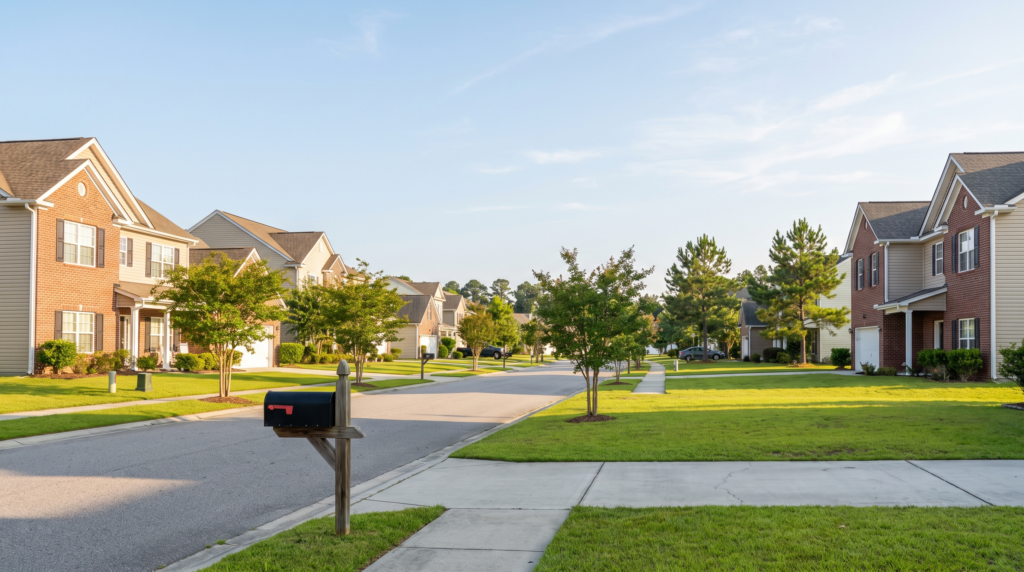
Goose Creek sits in an unusual spot, plumbing-wise. Drive one street and you are in a subdivision finished last year. Drive the next and you are looking at brick ranch houses from the 1970s, some still on well water. The plumbing problems in those two places have almost nothing in common.
Charles Towne Plumbing works across Berkeley County, and this is what we actually see in Goose Creek.
Older Goose Creek homes: pipe that has aged out
In the established neighborhoods off Red Bank Road and around St. James Avenue, most of what we get called for traces back to original material reaching the end of its life.
Galvanized supply pipe. Homes from the 1960s and 70s often still have it. Galvanized corrodes inward, so the pipe narrows year after year. The symptom is pressure that has been quietly declining for a decade, plus rust-tinted water on the first draw in the morning. There is no repair for it — the fix is repiping the affected runs.
Cast iron drain lines. These corrode from the inside and build up scale that catches everything. Recurring slow drains across a whole house, rather than at one fixture, usually points here.
Polybutylene. Grey plastic supply pipe installed roughly between 1978 and 1995, common in homes from that stretch. It becomes brittle and fails without warning, often at the fittings. If you have it, you are on borrowed time, and many insurers now ask about it directly.
Original water heaters that are well past due. Twelve years is optimistic for a tank in this area. The warning signs are usually there for months before the failure.
Newer construction: different problems, same house age
The newer subdivisions off College Park Road and toward Carnes Crossroads have modern PEX and PVC throughout, so the material is not the issue. What we see instead:
Builder-grade fixtures failing early. Cartridges, fill valves, flappers and supply lines chosen for the builder’s convenience rather than for longevity. These start going around year three to five, all at once, because they all went in the same week.
Settling. New construction on Lowcountry soil settles for a few years. That movement stresses joints and, on slab homes, can produce a slab leak in a house that is barely out of warranty. A warm patch on the floor or an unexplained bill increase is worth slab leak detection before it soaks the subfloor.
Undersized water heaters. A five-bedroom house handed a forty-gallon tank. It works until the family grows into the house.
Construction debris in the lines. Grout, sand and packaging left in drains during the build cause backups in the first couple of years that have nothing to do with how the family uses the house.
Well water in the outlying areas
Plenty of properties around Goose Creek and toward Moncks Corner are still on private wells. That brings its own list.
Hardness and iron. Berkeley County well water tends to be hard and often iron-rich. Hardness scales up water heaters and shortens their life considerably. Iron leaves orange staining in tubs and toilets and can affect taste. Both are treatable — see water filtration and well water treatment, and our guide to cleaner, softer water in the Charleston area.
Sulfur smell. The rotten-egg odor in well water is usually hydrogen sulfide or bacteria in the water heater, not a gas leak. Worth having identified rather than guessed at.
Pressure tank and pump problems. A pump that short-cycles — clicking on and off rapidly — is usually a waterlogged pressure tank. Left alone, it burns out the pump, which is the harder half of the system to replace.
Storm season here
Goose Creek is inland enough to avoid storm surge, but not the rain. September and October bring saturated ground, yard drains that cannot keep up, sump pumps that have not run since spring, and septic systems in the outlying areas that struggle when the drain field is already at capacity. Our hurricane season plumbing prep guide covers what to check.
Plumbing service across Goose Creek
We cover the full range here — water heater repair and replacement, drain cleaning, leak detection, repiping, well water treatment, sewer and septic line work, and emergency service when it will not wait.
Get in touch and tell us roughly when your house was built — it narrows things down faster than you would think.