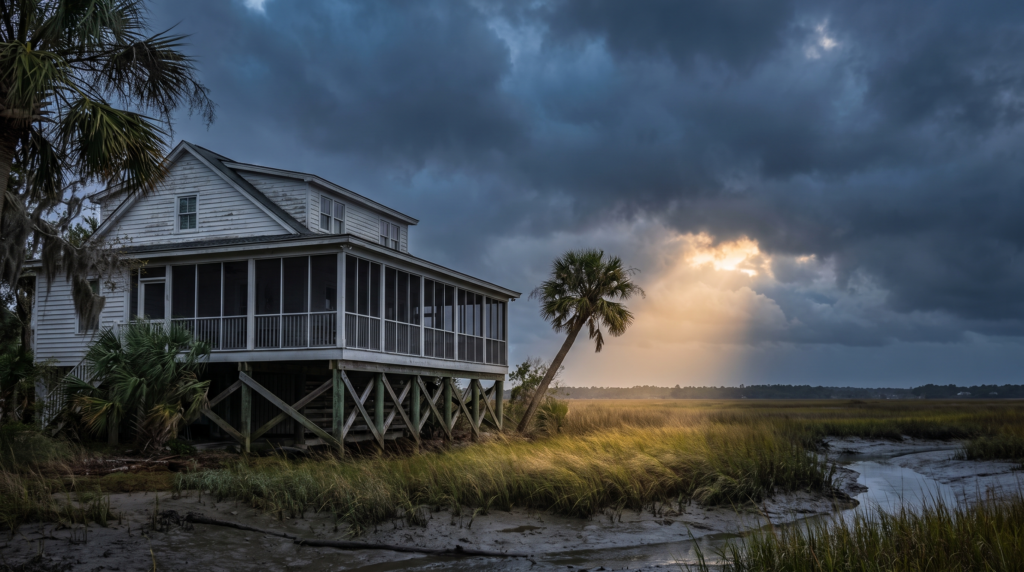
Hurricane prep lists in Charleston all cover the same ground: water, batteries, generator fuel, board up, know your evacuation zone. Almost none of them mention plumbing, which is unfortunate, because two of the most damaging things a storm does to a Lowcountry house are plumbing problems.
Atlantic hurricane season runs June through November, and the peak stretch is mid-August through October. Late July is roughly the last comfortable window to deal with any of this without competing for a contractor against everyone else on the coast.
The two ways storms damage Charleston plumbing
Water gets in from below. Storm surge and heavy rain overwhelm the municipal system. When the sewer main surcharges, that pressure has to go somewhere, and the lowest fixture in your house — a basement floor drain, a ground-floor shower, a crawl space cleanout — is the release point. This is how sewage ends up inside a house that never saw floodwater come through the door.
The power goes out and nothing works. No power means no well pump, no sump pump, no tankless water heater ignition, and no way to run the appliances you were counting on. People plan for the lights and forget the water.
Do these before the season peaks
Test the sump pump properly
Not by looking at it. Pour five gallons of water into the pit and watch the float rise, the pump start, the water leave and the pump shut off cleanly. Then check that the discharge actually goes somewhere away from the foundation and is not blocked. A sump pump that has sat idle since spring is the one most likely to fail on the night you need it.
If yours is more than seven or eight years old, or it struggled during the test, replace it now. Also consider a battery backup unit — a primary pump is useless in the exact conditions that cause the outage. We cover options under sump pump installation and repair.
Ask about a backwater valve
A backwater valve is a one-way gate on your sewer lateral. It lets waste out and stops the main from pushing back in. For a low-lying property in downtown Charleston, James Island or anywhere that has flooded before, it is the single highest-value plumbing upgrade you can make against storm damage. It is not a small job, but it is far less disruptive than one sewage backup and the remediation that follows.
Clear the drainage you control
Gutters, downspouts, yard drains, French drains, area drains around the foundation. Every one of them full of pine straw and oak debris means water pooling against the house instead of leaving it. If your yard drains are slow now, they will not cope with eight inches in a day. Hydro jetting clears buried lines that a hose will not touch.
Know where your shutoffs are — and that they turn
Find the main water shutoff and the gas shutoff. Actually operate them. Valves in older Charleston houses seize from years of sitting untouched, and finding that out in the dark during a storm is not the plan. If a valve will not turn, have it replaced now.
Strap and check the water heater
A full tank weighs several hundred pounds. Make sure it is secured, that the drain pan is intact and draining, and that the temperature and pressure relief valve is not corroded shut. If your heater is already near the end of its life, replacing it before the season peaks is easier than after — the signs are covered in our guide to when a water heater needs replacing.
When a storm is actually coming
- Fill the tub and containers for washing and flushing, plus bottled water for drinking
- Run the dishwasher and laundry before landfall so nothing sits wet
- Stop using drains once the main is surcharging — adding water to a backed-up system makes the backup worse
- Shut off the water at the main if you evacuate, so a failure while you are gone does not run for days
- Shut off gas at the appliance if instructed by the utility — and never turn gas back on yourself after a flood
- Turn off the water heater if you are leaving and shutting off the supply
Afterward
If floodwater reached your fixtures or crawl space, treat the water as contaminated. Do not restore gas appliances yourself. Have the sewer lateral inspected before assuming everything drained normally — storm debris and shifted soil break laterals regularly, and the damage often shows up weeks later as a slow drain rather than immediately.
Photograph everything before you clean up. Insurers ask.
Get ahead of the season
Charles Towne Plumbing handles storm-season preparation across the Charleston metro — sump pumps, backwater valves, drain clearing, shutoff replacement and emergency service when it counts.
Book a pre-season check while the calendar is still open.