Water heaters rarely fail politely. They go on a Sunday, or the morning you have guests, and the question you have to answer standing in a puddle is whether to fix it or replace it.
Deciding that under pressure rarely goes well. Deciding it in September, before the weather turns, is a different matter.
The age question comes first
Before looking at symptoms, find out how old the unit is. The manufacture date is encoded in the serial number on the label — usually the first four digits, as year and week or the reverse depending on brand.
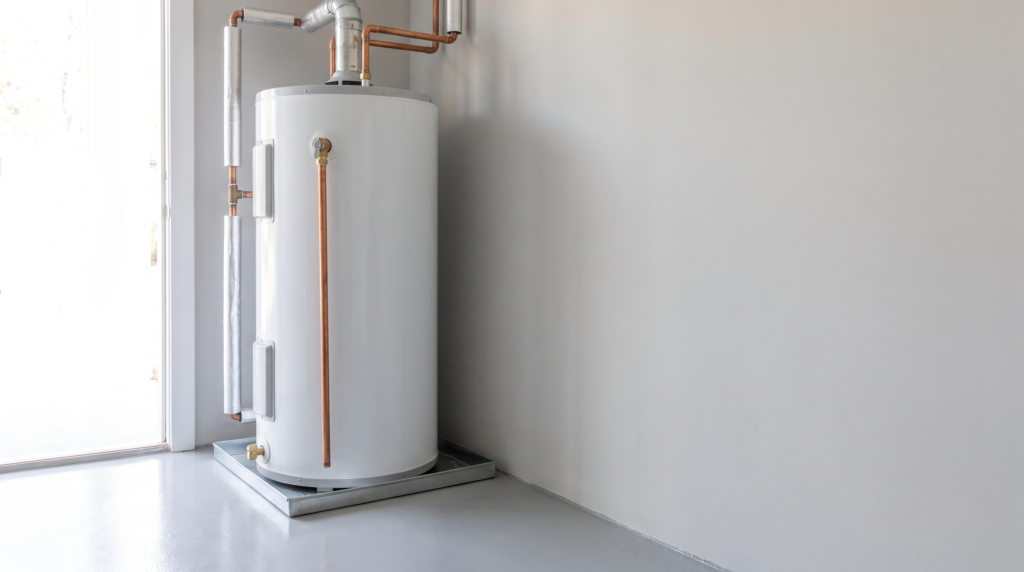
A conventional tank water heater lasts eight to twelve years. In the Charleston area, plan on the lower end. Hard water and high mineral content accelerate sediment buildup, and sediment is what kills tanks — it insulates the bottom of the tank from the burner, forces longer heating cycles, and stresses the steel until the lining fails. Tankless units run considerably longer, often fifteen to twenty years with maintenance.
The rule of thumb that holds up well: past about eight years, a significant component failure means replace rather than repair. You are otherwise extending something that is likely to fail again inside two or three years.
Usually worth repairing
These are component failures on a tank that is otherwise sound. On a unit under about eight years old, all of them are straightforward fixes.
- A failed thermostat or heating element on an electric unit — the classic symptom is lukewarm water, or hot water that runs out much faster than it used to
- A bad thermocouple or pilot assembly on a gas unit, where the pilot will not stay lit
- A leaking or weeping temperature and pressure relief valve, which is a valve replacement, though it is worth finding out why it opened
- Leaking supply connections or the drain valve — fittings, not the tank
- Sediment noise — popping or rumbling during heating often responds to a flush, if it has not gone too far
- A spent anode rod, which is genuinely preventive: replacing it on schedule is the most effective way to extend tank life
Usually time to replace
Water coming from the tank itself. This is the decisive one. If the leak is from the body of the tank rather than a fitting or valve, the internal lining has failed and the steel is corroding through. There is no repair. It will get worse, and tanks that seep eventually let go all at once.
Rusty or brown hot water. If cold water runs clear and only the hot is discolored, corrosion is happening inside the tank.
It is past twelve years and something has failed. Even a minor fix on a unit that old is work done on borrowed time.
Repeat repairs. Two service calls in a year on the same unit is the tank telling you what comes next.
It genuinely cannot keep up. If the household has grown and you run out of hot water daily, repairing it fixes nothing — the unit is the wrong size. That is a capacity problem, not a fault.
What Charleston water does to a tank
Two local factors shorten water heater life here more than most people expect.
Mineral content. Harder water means faster sediment accumulation. An annual flush makes a real difference, and most tanks in this area never get one. If you have never flushed yours, that alone may explain the noise and the declining performance. Treating the water upstream helps too — see our guide to cleaner, softer water in Charleston.
Humidity and salt air. Units in garages, crawl spaces and unconditioned utility closets corrode on the outside as well as the inside, particularly closer to the water. Check the base and the fittings, not just the top.
If you are replacing, decide the type deliberately
A conventional tank is the simplest to swap and fine for most households. You are limited to what the tank holds.
Tankless is a bigger installation, lasts longer, takes up far less space and does not run out. The catch is that it needs adequate gas supply and venting — on an older Charleston home the existing gas line often needs upsizing, which belongs in the scope from the start rather than as a surprise. Our overview of tankless water heaters in Charleston goes deeper.
Heat pump (hybrid) units are markedly more efficient to run, are a larger installation, and need adequate air volume around them — a sealed closet will not do. They suit our mild climate well.
Also take the opportunity to size it correctly rather than replacing like for like. Household size changes; the tank you bought nine years ago may not be the tank you need now.
Why September is the right month for this
Water heaters fail disproportionately in the first cold snap, when incoming water temperature drops and the unit has to work considerably harder. A tank that was coping all summer suddenly cannot, and a marginal component gives out.
Dealing with it now means you choose the unit, weigh the options and schedule the work. Dealing with it in January means you take whatever is on the truck. If yours is over eight years old, a September inspection and flush is a genuinely good use of a service call.
Get a straight recommendation
Charles Towne Plumbing handles water heater repair and replacement across the Charleston metro. If yours is worth repairing, we will tell you so.
No hot water right now? Start with what to check first, then get in touch.