
Most people search for sewer line repair near me after something has already gone wrong: a toilet that gurgles when the washer drains, a tub that fills from below, or soft ground along the yard. The short answer is this. Treat sewage inside the house as a health hazard, stop running water, and get a camera into the line before anyone quotes a repair. What the camera finds decides whether the line needs a cleaning, a liner, or a dug replacement.
Raw sewage in the house is a health hazard, not just a mess
When a sewer line backs up, what rises through the floor drain or the lowest tub in the house is not gray water from a sink. It is wastewater carrying bacteria, viruses, and parasites, and the Centers for Disease Control and Prevention advises avoiding contact with sewage and with anything it has soaked. Young children, older adults, anyone who is pregnant, and anyone whose immune system is weakened by illness or treatment face more risk from that exposure than a healthy adult does.
So the first moves in a backup are about people, not pipes. Keep children and pets out of the wet rooms and off any flooring that got soaked. Stop using every fixture in the house, including the washing machine and the dishwasher, because each cycle sends more water toward the blockage. If you have to cross the area, wear waterproof boots and gloves, keep your hands away from your face, and wash thoroughly once you are out.
Porous materials that absorb sewage, including carpet, padding, cardboard, and drywall near the floor, usually cannot be cleaned back to safe and come out instead. Hard surfaces can be washed and disinfected. Move air through the rooms, and never mix bleach with ammonia or with another cleaner. If anyone in the house develops stomach illness, a fever, or a skin infection after contact, that is a call to their own doctor rather than something to wait out.
A clogged sink is an inconvenience. A main line backup is an exposure that continues for as long as the water sits, and it belongs in a different category than the rest of the weekend to-do list.
The signs that show up before a full backup
Sewer lines rarely fail without notice. The notices are just easy to explain away one at a time.
- Two fixtures misbehaving together: the toilet bubbles when the shower runs, or the tub gurgles when the washing machine empties.
- Drains going slow all over the house at once, rather than the one sink that has always been sluggish.
- A sewer smell in a bathroom or crawl space that does not clear, often strongest after heavy rain.
- Water standing in a floor drain, a crawl space, or the lowest shower in the house.
- A strip of yard that stays soft, unusually green, or slightly sunken along the path from the house to the street.
- The same line clogging again a few weeks after it was cleared.
One slow sink is a fixture problem. Several fixtures acting up at once points at the main line they all share. A wet patch in the yard can also come from a pressurized water line instead of the sewer, and the two behave differently; our guide to finding a hidden water leak before it reaches the slab explains how to tell them apart. Timing is a clue too. If the backups arrive with the tide or a hard rain rather than with heavy water use in the house, read how king tides push backups into Charleston homes.
Why Lowcountry sewer lines fail
Charleston asks more of a sewer line than a dry inland city does. Sandy soil moves. The water table sits close to the surface across much of the peninsula and in the low parts of James Island and West Ashley, so a cracked pipe does not only leak out: groundwater and fine sand work their way in and settle where the flow is slowest.
Cast iron, clay, and mid-century pipe
Homes built before the mid-1970s were commonly drained with cast iron inside the house and clay or a tar-impregnated fiber pipe, often called Orangeburg, outside it. Cast iron corrodes from the inside out: the smooth bore turns to rough scale, the scale catches paper and grease, and the bottom of the pipe eventually wears through. Clay joints open as the ground around them shifts.
Roots, grease, and wipes
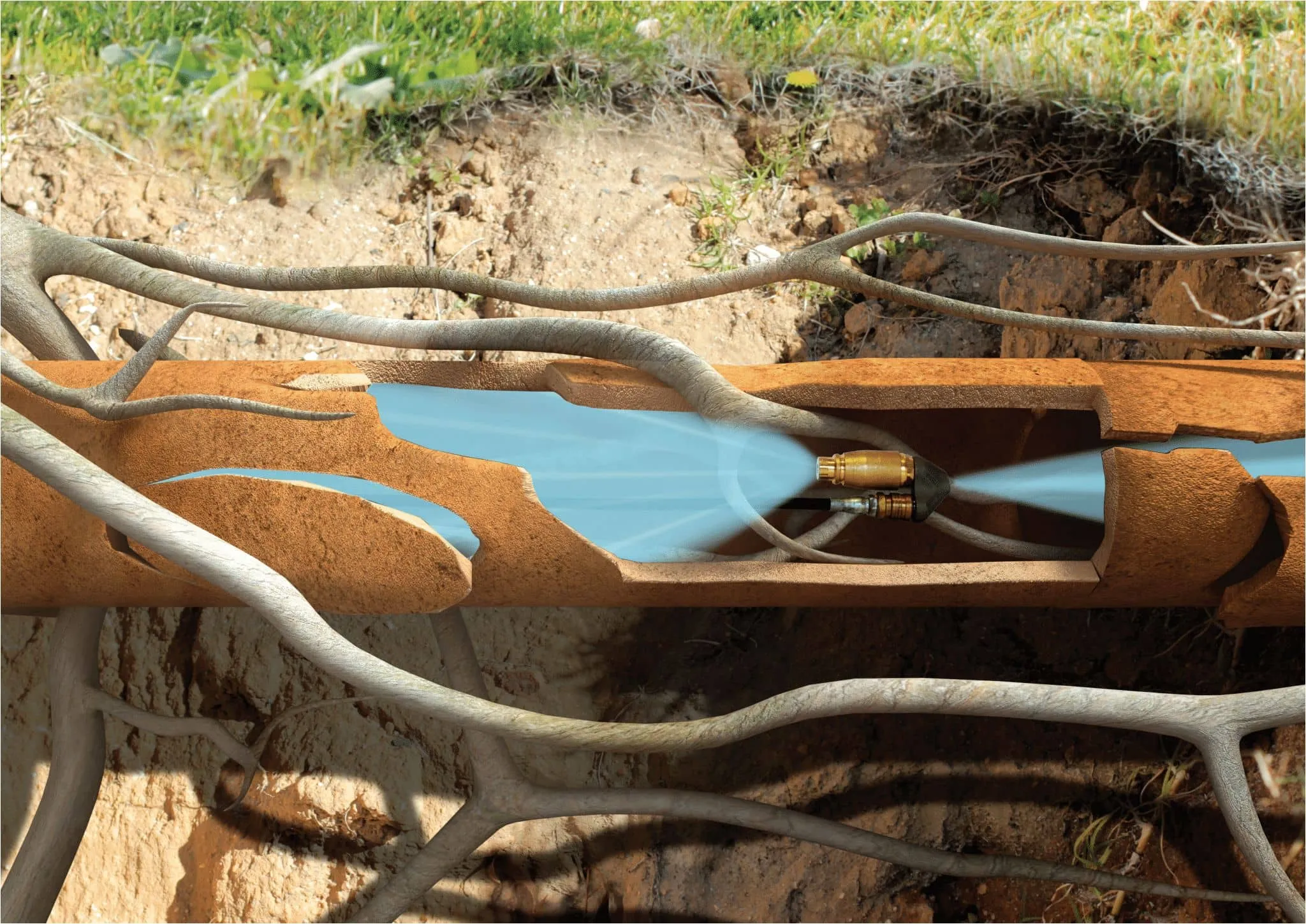
Live oak and water oak roots follow moisture, and a hairline crack or an open clay joint is the easiest water in the neighborhood to reach. Once roots are inside the pipe they act like a net, holding back everything that passes. Grease cools and hardens on scaled walls. Wipes sold as flushable do not break down the way toilet paper does, and in an older line they are often what turns a narrowed pipe into a blocked one.
Bellies and the tide
Settlement leaves low spots, called bellies, where water stands and solids drop out instead of moving along. On high tides, water downstream slows everything the line is trying to carry away. None of this is a homeowner’s doing. It is the Lowcountry working on pipe that was installed for a different century.
The camera inspection that decides the repair
Nobody can tell from a backed-up tub whether a line needs cleaning or rebuilding. A sewer camera inspection settles it. A plumber feeds a camera on a push rod or reel through a cleanout, usually after the line has been opened up enough to see, and watches the inside of the pipe on a monitor as it travels.
A good inspection comes back with specifics: the pipe material and diameter, the distance from the cleanout to the trouble, what the trouble actually is (a root mass, heavy scale, a belly, an offset joint, a crack, or a collapse), and how much of the run is still structurally sound. A locator at the camera head marks the depth and the path across the yard, so the repair plan can work around a driveway, a brick walk, or a tree worth keeping.
Ask to watch the screen while it happens, and ask for a copy of the footage. A line that needs a liner looks nothing like a line that needs a cleaning, and seeing the difference turns a quote into a decision you made yourself. At Charles Towne Plumbing the same camera goes back down after the work for post-repair verification, which is the only honest way to show that the repair did what it was sold to do.
Your sewer line repair options, from cleaning to replacement
Repairs fall into four families, and the footage decides which one fits.
Clearing and cleaning
If the pipe is sound and the problem is what sits inside it, cleaning is the repair. A cable cuts roots back; hydro jetting scours the pipe wall with high-pressure water and flushes out the scale, grease, and sand that a cable slides past. Cleaning buys years on a pipe with no structural damage, and it buys nothing at all on a pipe that is broken.
Spot repair
One failed joint, a section crushed under a flower bed, a side connection that dropped: those can be dug and replaced at a single point without disturbing the rest of the run. The camera locate is what makes a small hole possible instead of a long trench.
Trenchless lining
Trenchless pipe lining rebuilds the pipe from the inside. The old line is cleaned to bare wall, then a resin-saturated liner is pulled or inverted into place and cured, leaving a new jointless pipe inside the old one and no trench across a historic garden or a driveway. ASTM International publishes the standard practice for this cured-in-place method. Charles Towne Plumbing owns its own relining company, Carolina Relining Solutions, so the lining is done in-house by licensed plumbers rather than handed to a subcontractor. Our walkthrough of how the pipe relining process works covers the sequence step by step, and comparing Picote epoxy coating to UV inversion CIPP lays out the two methods and where each one fits.
Full replacement
When a line has collapsed, sagged past the point a liner can correct, or lost too much host pipe to line, open-cut sewer repair and replacement is the answer: dig the run, lay new pipe at proper slope, and backfill. It is the most disruptive choice and sometimes the only durable one.
What the repair day actually looks like
Lining a residential sewer line follows a sequence, and knowing the order makes the day much less unsettling.
- Access. The crew works from a cleanout. Where a house does not have one, adding it is often the first task, and it makes every future visit easier.
- Cleaning. Roots cut out, scale cut back, the line jetted until the wall is bare, because resin only bonds to clean pipe.
- Measurement and a second camera pass, to confirm the liner length and that the host pipe can carry it.
- The liner. The resin tube is set against the pipe wall and held there while it cures; some systems cure with ultraviolet light, others with time or heat.
- Reinstatement. Branch connections are reopened from the inside so the kitchen and bathroom lines drain into the new liner.
- Verification. The camera goes back down, and the footage is yours.
Open-cut work has a different rhythm: locating and marking utilities first, then cutting a trench along the marked path, replacing pipe and setting slope, then backfilling and compacting so the yard does not sink a year later. Restoration, whether that is sod, pavers, concrete, or a brick walk relaid by hand, is part of the job and belongs in the written estimate rather than in a surprise at the end.
In either case, ask how long the house will be without drains. A liner cannot be used while it cures, and a trench across the only driveway changes where you park. Both are easier to plan around than to discover.
What sewer line repair costs, and what moves the number
No honest plumber quotes sewer work over the phone, and we do not publish a single price for it, because the same symptom can mean a short cleaning or a new line across a front yard. What a repair costs tracks a short list of things that are visible on the camera footage.
- Length: whether the defect sits at one joint or runs most of the pipe.
- Depth, and what sits on top of the line, from lawn to driveway to brick to mature roots to a historic wall.
- Method: cleaning, a spot repair, a liner, or full replacement.
- Access: whether a usable cleanout exists, and where the line crosses the property.
- Permits and restoration, which travel with digging far more than with lining.
Lining often compares better than it first looks once restoration is counted, because relaying a brick driveway is its own project. The way to keep any of it predictable is a number in writing before the work starts. Charles Towne Plumbing gives upfront, flat-rate pricing with a clear estimate before we start, and financing options are posted for the larger jobs. If you would rather not meet your plumber during a backup at all, an annual maintenance membership puts the house on a schedule instead of a crisis.
How to choose a sewer line repair company near you
Search results for a local plumber fill up with directories and ad pages, and many of them are lead brokers rather than the crew that will show up at your cleanout. A few questions sort it out quickly.
- Will you put a camera in the line before quoting, and will you show me the footage?
- Are the plumbers on this job licensed, and who pulls the permit?
- Do you do the lining yourselves, or subcontract it?
- Do I get a written, flat-rate estimate before anything starts?
- Will you camera the line again when the repair is finished?
Local knowledge matters here beyond drive time. A plumber who has opened up peninsula yards knows what tends to sit under a Charleston sidewalk, which streets run low, and how a tide shows up in a drain. Charles Towne Plumbing is locally owned, with two addresses in the metro, 4952 Rivers Ave in North Charleston and 383 Sumter St in Charleston, and it covers sixteen communities across Charleston, Dorchester, and Berkeley counties; the communities we serve lists them. For the part no company can write about itself, read what your neighbors are saying.
Keeping a repaired line clear
Paper and what the body leaves: that is the whole list for a toilet. Wipes, paper towels, cotton rounds, and dental floss all survive the trip and catch on anything they find. Cooking grease goes in the trash once it cools, not down the drain with hot water behind it, because it hardens again as soon as it meets cool pipe. A disposal grinds food small enough to travel, not small enough to dissolve, so run plenty of cold water with it and keep fibrous scraps out.
Roots do not give up because the pipe is new; they go looking for the next opening. A line running through a yard with mature oaks is worth a camera look on a schedule rather than after the next backup, and drain cleaning on a schedule is a smaller job than an emergency on a holiday weekend. Learn where your cleanout is while nothing is wrong, and keep it clear of mulch, pine straw, and planting beds. The plumber who can find it in the dark gets to work sooner.
If sewage is coming up tonight
Stop using water. Keep people and pets out of the wet rooms. If the water is still rising, or if it has reached a bedroom, a hallway, or anywhere else people live, this is not a morning problem; the line is open to the inside of the house, and the exposure continues until the water is gone and the surfaces are cleaned. Charles Towne Plumbing is open 24 hours a day on one line, (843) 212-4111, staffed around the clock rather than routed through a queue.
While you are waiting, there are useful things to do. Shut off the washing machine and the dishwasher mid-cycle. Move anything porous off wet flooring. Photograph the rooms before cleanup starts, because your insurer will want to see them. Our page on the 24/7 emergency plumber in Charleston covers what to do first, and the companion guide to what to shut off after hours, and what can wait until morning sorts the problems that need someone tonight from the ones that can hold until daylight.
A backup is worth taking seriously the first time it happens, not the third. A camera turns a frightening mess into a known problem with a short list of answers, and plenty of Lowcountry homeowners find the repair is smaller than the worry was. If your drains have been talking to you, get in touch with Charles Towne Plumbing and we will put a camera in the line.
Frequently asked questions
What is the average cost to repair a sewer line?
There is no useful average, because the same backup can mean a cleaning or a new line across the front yard. The cost follows the length of pipe involved, how deep it sits, what is on top of it, the method the camera footage supports, and whether permits and restoration are part of the work. Ask for a camera inspection first and a written, flat-rate estimate second, so the number you hear is tied to what is actually in the pipe.
Can sewer pipes be repaired without digging?
Often, yes. If the old pipe still holds its shape, it can be cleaned and relined from the inside, leaving a new jointless pipe within the old one and no trench across the yard. Lines that have collapsed, sagged badly, or lost too much of the original pipe have to be dug and replaced. The camera inspection is what tells you which group your line is in.
Is a sewer backup covered by homeowners insurance?
Water that backs up through a drain is commonly excluded from a standard homeowners policy and offered instead as a separate endorsement, so coverage depends on what you bought. Read your policy or call your carrier before cleanup starts, and photograph the affected rooms while the damage is still visible. Your carrier can tell you what documentation it wants from the plumber.
How do I know whether the blocked line is mine or the utility’s?
In most areas the homeowner is responsible for the lateral that runs from the house to the public main, and the utility is responsible for the main itself, though the dividing line is set by your local utility. A camera run from the cleanout shows how far down the line the defect sits, which usually answers the question. If neighbors are backing up at the same time, call the utility as well.
Can I pour a chemical drain cleaner into a main line backup?
No. Chemical cleaner sits in the standing water instead of reaching a root mass, a crack, or a belly far down the line, and it makes that water more hazardous for whoever opens the pipe later. On older cast iron it attacks pipe that is already thin. Mechanical clearing and a camera are the right tools for a main line.